Este mapa que me fue dado durante la guerra sucia (1976-83) y lo publico hoy en conmemoración a todos los desaparecidos y aquellos que tuvieron que soportar uno de los gobiernos más sangrientos de la América Latina.
¡Nunca más!


Este mapa que me fue dado durante la guerra sucia (1976-83) y lo publico hoy en conmemoración a todos los desaparecidos y aquellos que tuvieron que soportar uno de los gobiernos más sangrientos de la América Latina.
¡Nunca más!
Todo empezó allá por 1944 cuando Rodolfo Walsh tenía 17 años y contestó un aviso en un diario porteño de la Editorial Hachette, situado en pleno centro de la capital, en la calle Maipú 41. La editorial buscaba un traductor del inglés al castellano de carácter permanente.
En aquel entonces, Hachette tuvo por muchos años unas ediciones de bolsillo literatura universal, libros para la juventud, la divulgación científica y otra dedicada a la novela policial. La novela policial tiene un desarrollo muy grande durante los años 40 en los Estados Unidos, y se seleccionaba obras de escritores de novelistas policiales que se traducían del inglés al castellano. “Entonces, una de las personas que se presentó para el trabajo fue Rodlfo Walsh,” dice Horacio GuillermoManiglia, hijo de Horacio Aníbal Maniglia, quien había contratado a Walsh en Hachette. “El era joven y por ser un argentino de familia irlandesa y haberse educado en colegios irlandeses, obviamente conocía muy bien el idioma inglés.”
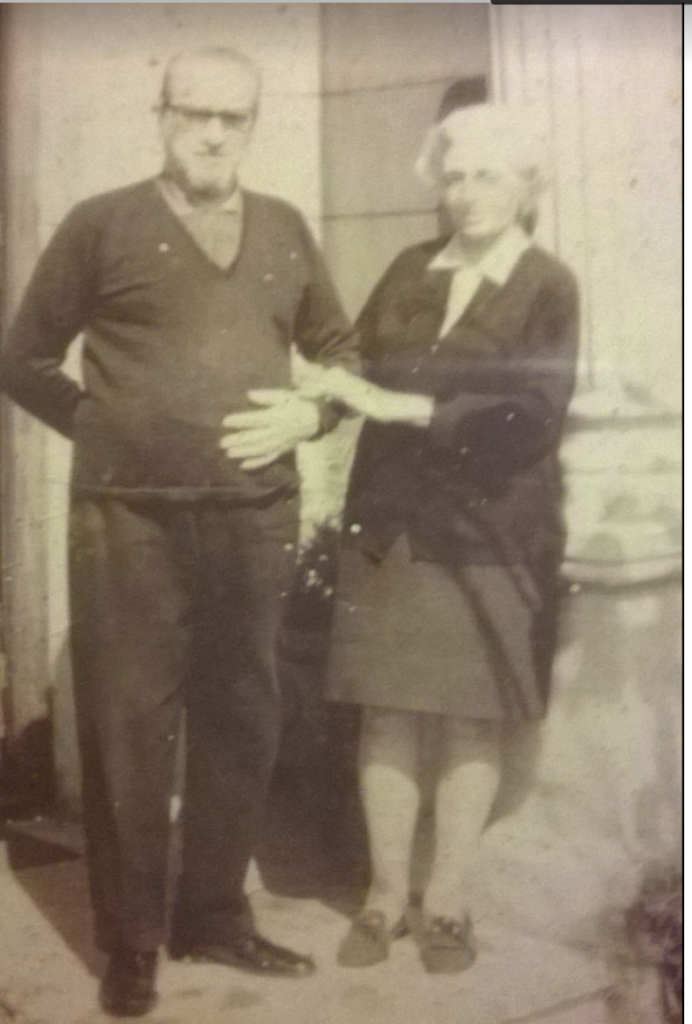
Maniglia dice que su padre, Walsh le pareció ser una persona muy inteligente y muy capaz, y es por eso que lo tomó como empleado permanente.
“Se desempeñó muy bien y a los veinte años le toco a Walsh hacer el servicio militar,” continua Maniglia. “Hizo el servicio militar y le mantuvieron el puesto porque ya había acreditado sus capacidades. En 1953 publica su primer libro, ‘Variaciones en rojo,’ y se lo dedica a mi padre.”
Según Maniglia hijo, la relación que tenía su padre con Walsh era de una amistad intelectual y profesional. “Los dos eran traductores de libros y amantes de la literatura y del buen cuento literario,” dice.
Como se sabe, Walsh empezó a interesarse en la política a raíz de algunos acontecimientos políticos muy famosos. En el año 1955 se produce un golpe de estado, el 16 de septiembre, llamado irónicamente la Revolución Libertadora, cuando derrocan al presidente Juan Domingo Perón, instigados por los general Pedro Eugenio Aramburu y su vicepresidente, el almirante Isaac Francisco Rojas. “Al año siguiente (1956), se
produce un levantamiento militar en contra de Aramburu (encabezado por los generales Juan José Valle y Raúl Tanco), que es reprimido con gran violencia,” continua Maniglia. “Clandestinamente, se lleva a algunos de los implicados a un descampado situado en José León Suárez (en las afueras de la ciudad de Buenos Aires), y allí se los fusila a todos, excepto a uno.”
Es entonces cuando Walsh empieza una larga investigación, luego de haber obtenido un mensaje escrito de un desconocido en un bar de la ciudad de La Plata, diciendo que “todos los fusilados no están muertos.” Comienza el gran trabajo investigativo de Walsh para localizar a esta persona sobreviviente y escribir su célebre libro Operación Masacre.
“Como todo se debía hacer en gran secreto,” continua Maniglia, “Walsh se veía obligado a cambiar de domicilio y a no estar siempre en el mismo lugar. Temía sufrir alguna represalia porque estaba investigando y metiendo la nariz donde no debía. Mi papá le ofreció en esta circunstancia una casa muy modesta que tenía en Pontevedra, en las afueras de la Capital Federal, y Walsh aceptó porque no tenía muchas opciones para refugiarse.”
Maniglia hijo, quien tenía en aquel entonces sus 17-18 años, acompañó a Walsh a esa casa en invierno, porque su padre, Horacio Aníbal, no pudo hacerlo por razones de trabajo. El se acuerda que Walsh había tomado su máquina de escribir portátil para empezar a escribir su obra.
La casa donde Walsh se alojó por poco tiempo era de unos 50 a 60 metros cuadrados, y tenía dos ambientes grandes después de la cocina y un baño. Construida a fines del siglo XIX, estaba hecha con ladrillos que no se usaban más, puertas de madera de cuatro pulgadas, ventanas que nacían a 20 cm del piso hacia arriba, con rejas. No tenía electricidad y había que usar faroles. “Ampliamos la galería de atrás y la hicimos más ancha,” dice. “Una característica de la casa era que no tenía ninguna calefacción,porque en realidad nosotros no íbamos nunca, salvo por un momento en el verano.”
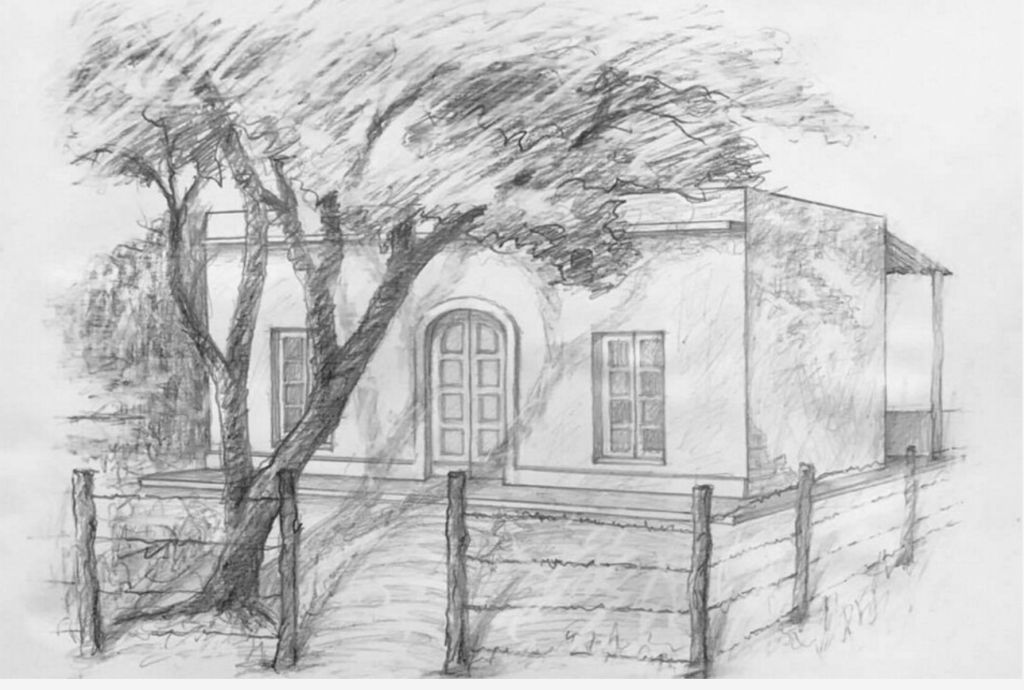
Walsh se alojó allí 3 ó 4 días, o a lo sumo una semana, hasta que el frío lo obligó a huir. “Cuando lo vi, me dijo jocosamente que prefería morir a quedarse allí otro día,” continua. “A pesar de que en el dormitorio tenía una cama con dos mantas de lana hechas por los indígenas del norte y que tenían un espesor de un centímetro cada una, el frío era insoportable y el único lugar donde había calefacción era la cocina.”
Desde Pontevedra, Walsh se había trasladado a vivir a la región del Delta del Paraná, donde terminó de escribir “Operación masacre.”
Veinte años mas tarde, el viernes 25 de marzo de 1977, en la esquina porteña de San Juan y Entre Ríos, es abatido a balazos por un grupo de tareas de la notoria Escuela de Mecánica de la Armada (ESMA). No me acuerdo de esa fecha y qué estuve haciendo. Estoy casi seguro que visité a mi tío Horacio Aníbal en Flores, pero de Walsh y su relación con él no hablamos, hasta que me lo contó su hijo en 2015.
Sin duda, la Argentina había perdido, hace exactamente cuatro décadas, a un gran periodista y luchador social. La modesta historia de la relación de mi tío con Walsh, cuando aún no había llegado a la fama, la pude rescatar de pura casualidad. Es como cuando él se encontró una tarde con el mensaje “hay un fusilado que vive,” en aquel bar de La Plata, que le cambió su vida y la del país para siempre.
Argentina has a reputation among some Latin Americans of being the most racist country in the region. The election of President Donald Trump has emboldened politicians like Argentinean President Mauricio Macri to parrot his USAmerican counterpart’s racist worldview.
Argentina, like Canada, Australia and the United States, is a nation built on immigration. When we speak of immigration, however, we have to stress that we mean white European immigration.
Between 1881 and 1914, over 4.2 million immigrants moved to Argentina from Europe.[1] By 1914, 30.3% (2.358 million) of the country’s total population was foreign born with as many as 49.4% of the inhabitants of the capital Buenos Aires being born elsewhere. [2]
When you ask Argentineans about what happened to the Amerindians, which were wiped out of their lands in the nineteenth century, some of their answers justify genocide. “There were so few of them,” is one response you may hear, which means that they were near-non-existent and therefore it was acceptable to commit genocide.
Few Argentineans know that at the beginning of the nineteenth century, when Argentina was a Spanish colony until 1816, that 38% of the population of about 400,000 people were whites with 32% being blacks and of mixed black ethnicity. [3]
European immigration during the second half of the nineteenth century and in the following century effectively whitewashed Argentina of other visible ethnicities such as blacks and Amerindians.
While Argentineans proudly claim that they are a tolerant and understanding country because they took in so many immigrants, we must ask to which immigrants and groups were accepted.

Racist comments by some white Argentineans reinforce how racism and bigotry are still alive and kicking in the country. “White” in Argentina means anyone who has a European background. Those of mixed mestizo ethnicity, Europeans mixed with Amerindians, are called disrespectfully cabecita negra, or little black head.
One of the matters that Argentineans can be proud of is its history, especially those that never gave up their hope for social justice. Reading Argentinean history especially from the 1880s to the present is like reading a novel of an ongoing and never-ending struggle.
What does that history tell us? It reveals to us of a people who have won and lost and won and lost again in their hope to build a country that is based on social justice.
One of the biggest instigators of change in Argentina were the millions of immigrants who came here like my great grandparents.
In light of the latter, it is surprising that the present discourse in Finland tends to show that immigration and immigrants are “a problem.”
That is how off base the debate is in Finland is and how little we know about our own immigrant history. Over 1.2 million Finns emigrated between 1860 and 1999. They
Over 1.2 million Finns emigrated between 1860 and 1999. They
They too led the way and gave us roots, which, unfortunately, aren’t still acknowledged in Finland.

The Paris attacks of Friday 13 came as a windfall to hardliners who still believe that the solution in the Middle East is military. We are now seeing the impact of such a mistaken policy in the way of hundreds of thousands of asylum seekers coming to Europe this year and the terror attacks of Friday.
Zoe Samudzi offers us poignant analysis of the terror that struck Paris:
“It is important to honor the individuals who were killed in these acts of violence, and central to honoring their deaths is ensuring that we understand why these attacks may have happened in an effort to prevent further human suffering.”
The big question, and a very effective one, is if we want to honor these individuals by understanding why such attacks took place in the first place.
It would be interesting to find out what percentage of Europeans, who are not driven by fear or feelings of blind revenge, believe what President Barack Obama said about the attacks and that they were against “all of humanity and the universal values we all share.”
Are those “universal values” that President Obama states include invading and sledgehammering other countries?
France, which has been one of the most bellicose countries against Syria, responded with a new wave of bombings shortly after the attacks in Paris. You don’t have to be an expert on the Middle East to understand that those bombings won’t solve anything except increase the number of deaths and amount of destruction.

Continue reading “France’s and Isis’ spiral of one-way terror and destruction”
Este 24 de marzo, conmemorando a esta fecha infame en la historia argentina, dedico este humilde escrito a Rodolfo Walsh quien murió un día después del primer aniversario de la dictadura militar de Jorge Rafael Videla.
Aquí publicamos su “Carta abierta a la Junta militar en 1977, al cumplirse un año del golpe de Estado de 1976:”
CARTA ABIERTA DE UN ESCRITOR A LA JUNTA MILITAR
1. La censura de prensa, la persecución a intelectuales, el allanamiento de mi casa en el Tigre, el asesinato de amigos queridos y la pérdida de una hija que murió combatiéndolos, son algunos de los hechos que me obligan a esta forma de expresión clandestina después de haber opinado libremente como escritor y periodista durante casi treinta años.
El primer aniversario de esta Junta Militar ha motivado un balance de la acción de gobierno en documentos y discursos oficiales, donde lo que ustedes llaman aciertos son errores, los que reconocen como errores son crímenes y lo que omiten son calamidades.
El 24 de marzo de 1976 derrocaron ustedes a un gobierno del que formaban parte, a cuyo desprestigio contribuyeron como ejecutores de su política represiva, y cuyo término estaba señalado por elecciones convocadas para nueve meses más tarde.
En esa perspectiva lo que ustedes liquidaron no fue el mandato transitorio de Isabel Martínez sino la posibilidad de un proceso democrático donde el pueblo remediara males que ustedes continuaron y agravaron.
Ilegítimo en su origen, el gobierno que ustedes ejercen pudo legitimarse en los hechos recuperando el programa en que coincidieron en las elecciones de 1973 el ochenta por ciento de los argentinos y que sigue en pie como expresión objetiva de la voluntad del pueblo, único significado posible de ese “ser nacional” que ustedes invocan tan a menudo.
Invirtiendo ese camino han restaurado ustedes la corriente de ideas e intereses de minorías derrotadas que traban el desarrollo de las fuerzas productivas, explotan al pueblo y disgregan la Nación.
Una política semejante solo puede imponerse transitoriamente prohibiendo los partidos, interviniendo los sindicatos, amordazando la prensa e implantando el terror más profundo que ha conocido la sociedad argentina.
Continue reading “Nunca más: 24 de marzo de 1976 y Rodolfo Walsh”
I’ve taught students the UN Declaration of Human Rights. Some had never heard of it. I had heard of it but never understood its meaning until one April overcast day in 1977 when I was arrested and thrown into a police cell. What happened to me on that Saturday afternoon changed my life permanently.
During the heyday of the dirty war (1976-83), when Argentina turned into a nightmare inhabited by phantoms and ogres that roamed the streets of the country with impunity, rule number one was that you never ever left your home without some ID.
At the time, US President Jimmy Carter had started his presidential term (1977-81) in January and announced a major shift in Washington’s foreign policy, which would pay closer attention to human rights. Such a foreign policy would have saved so many lives and suffering in the region. Declassified documents point to Washington’s complicity and that of Secretary of State Henry Kissinger’s in Argentina’s bloody coup.
After lunch I went for a walk with a friend and passed by an attractive house, which I discovered later was the home of the US consul. I focused the camera on the building but didn’t take a picture of it. Twenty yards later two policemen in civilian clothes stop us at the corner as they wave their pistols menacingly at us.
We’re escorted to the house where I pointed my camera on.
We’re asked for documents. I search for mine and discover that I forgot them at my friend’s house. The guards allow my friend to get my ID. He returns but soon a squad car arrives.
“What should we do with them?” one of the body guard asks the police officer who steps out of the car.
“Let’s take them down to the police station,” he responded.

Riding inside a police car in Argentina during the dirty war was an eerie experience because all the people who were outside didn’t notice you. They looked the other way as if a ghost car drove past them.
We’re put in separate cells and are ordered not to utter a word. There are stories in the Argentine media about habeas corpus but they won’t help me today.
Coarse dark walls with carved messages greeted me as the day was slowly turning itself off and making way for night. As the iron door shut and locked behind me, my eyes, as if drowning in water, ventured through a small iron-barred window that was big enough for a baby to climb through. I looked outside but was immediately stopped by coiled barbwire where a lone leafless branch hung just above it. Not knowing what was going to happen to me and for how long I’d be detained, I decided to rest my hopes on the leafless branch and image that if I were a bird I could fly to free.
Amid the backdrop of cold concrete walls and uncertainty, I remembered once again President Carter’s words about the importance of human rights in US foreign policy.
Two police guards opened the cell door and ordered me to a large office where I was told to sit in front of an enormous desk that took a few seconds for my sight to travel to a police officer who sat stoically at the other end.
”You’ve committed a serious crime,” he said after a long lapse of silence hinting at nothing. ”Do you have any idea what you’ve done?!”
I don’t remember what he said after that question but it sounded like the reasoning a soldier had just before he was going to bayonet an enemy soldier’s guts. This is what I interpret him saying:
”Let me give it to you straight: Only the meek have stayed on, the bare minimum to sustain military rule so we can still run our factories. Just enough people to make our cities, towns and villages not appear too deserted. This is going to be a long war against the terrorists but we’ll prevail in the end.”
Escorted back to the cell, I passed by another one that still intrigues me after 37 years. The cell that I passed was the only one that was lighted by a naked light bulb. As I passed it, I swiftly sneaked a peek through the barred door. I noticed a person sitting on a stool with their back turned against me.
The image of that person became an obsession. Who was it? Why was that person detained? Did the person disappear like tens of thousands of others during the dirty war?
If I didn’t like being a conscript in the Argentine army, I didn’t mind it that much now. If I didn’t return to the base on Monday they’d start looking for me.
After a long wait, the cell door opened again to a room with other policemen I noticed Major Echazú from the military base.
“Will that idiot step forward!” he yelled at the top of his voice. When my friend took the first step, the major yelled even louder: “No, I mean the other idiot!”
I was on the verge of having a nervous breakdown. I was arrested for not taking a picture, I got stopped at gunpoint, I was thrown in a prison cell and now this, being balled out and humiliated in front of everyone! But there was a certain sparkle in Major Echazú’s eyes that told me that he was just acting.
“What the hell is wrong with you?!” he continued. “Do you think you’re in Hollywood? You can take that camera and stick it up your ass!”
After being thoroughly yelled at, both of us were fingerprinted by the police. I was given a warning by them: If anything happens to the US consul, I would be directly held responsible.”
Just as we were going to leave the police station, I noticed my camera on a table. It was given back to me.
As we drove away with a very deep sigh of relief, Major Echazú said we were lucky. The police and the military are rivals and there’s usually no love lost between them.
How close was I becoming a silent and unknown victim of the dirty war? I’ll never know but one matter is for certain: If human rights were respected in Argentina, the military junta would have never committed so many atrocities as it did during its reign of terror.
Even so, how can a group of murderers respect human rights?
Today, 9/11, is the fortieth anniversary of the overthrow of President Salvador Allende by General Augusto Pinochet. A democratic era in Chile was abruptly and violently put to an end thanks to the support of the US President Richard Nixon and his secretary of state, Henry Kissinger.
In many respects, the coup of September 11, 1973 in Chile changed the Americas because Salvador Allende was a democratically elected president.

Even if the pictures from Santiago and Chile were grim on that day, the country’s new military rulers couldn’t destroy or erase the most priceless attributes of a nation: its collective memory.
Listen to Allende’s last speech (in Spanish) here.
The last song that Victor Jara composed a little before 9/11:
http://www.youtube.com/watch?v=en8yqVxuT-U
________
Excerpt from an unpublished short story, The conspiracy of clocks: A return to the past. How many did the military detain, tortur and murder?
…After a long wait I was locked up in a prison cell. Coarse dark walls with carved messages greeted me. As the iron door shut and locked behind me, my eyes ventured through a small iron-barred window that was big enough for a baby to climb through. I looked outside but was stopped from venturing any further by coiled barbwire where a lone leafless branch hung just above it. Not knowing what was going to happen to me and for how long I’d be detained, I decided to rest my hopes on the leafless branch and imagined if I were a bird, I could fly to freedom.
Two police guards opened the cell door and ordered me to a large office where I was told to sit in front of an enormous desk that took a few seconds for my sight to travel to a police officer at the other end. His face was expressionless and his left eye twitched every time he spoke.
”You’ve committed a serious crime,” he said hinting at nothing. ”Do you have any idea what you’ve done?!”
The fear that torments me now feels like layers of bricks being stacked on my chest. The bricks kick the air out of me but don’t crush my ribs because my interrogators know the exact weight they must apply in order not to kill me.
”Let me give it to you straight: Only the meek have stayed on, the bare minimum to sustain military rule so we can still run our factories,” he said as his eye twitched. ”Just enough people to make our cities, towns and villages not appear too deserted. This is going to be a long war against the terrorists but we’ll prevail in the end.”
The interrogation ended abruptly…
Comment: It’s sad to point out 25 years after writing this opinion piece that Argentina has become a poorer country. Emigration continues to be the rule, not the exception. The opening up of the economy to foreign investment during the 1990s was a disaster. Too many foreign companies did not invest in Argentina to make it more efficient but to pillage its natural resources and markets. Corruption continues to be one of the country’s biggest issues and keeps Argentina from attaining its economic potential.
______________________
To govern is to populate.
Although Alberdi coined the phrase more than a century ago, it is still by and large true even though the statement has in mind Anglo-Saxon emigrants as opposed to Latins never mind Amerindians, blacks or Orientals.

As most long-range programes int his country, Argentina’s immigration policy turned out a failure. The flow should have been continuous and the vast empty patches of the countryside populated; new blood should have injected viror, social dynamism balanced with tolerance – political stability and economic prosperity should have been the rule.
True, Argentina did gain from the millions of immigrants that helped raise this country’s mid-19th century population of roughly one million to around eight million in 1914, paving the way for Argentina’s present-day 30-million-strong population.
As opposed to Australia, Canada and the US, during the early 20th century Argentina was in its own league when compared to the foreign-to-native ratio.
For instance, in the 1914 census 30 percent of the national population was composed of foreigners and, for Buenos Aires alone, this figure reached 40 percent. Add to these latter percentages the children of these original immigrants and the above-mentioned ratio becomes even more impressive.
No wonder why writer Manuel Gálvez, in a sarcastic allusion to Alberdi, said “to govern is to Argentinize.”
However, a number of internal and external factors – the Great Depression of the 1930s, World War II, domestic strife and instability, among others – curtailed the flow of immigrants thus giving way to a new demographic phenomenon: Argentina emigrants.
For those Argentines that left from the 1960s on, those who had made their homes here for a generation or two, Argentina became a stepping stone in their long search for a country that would offer them a decent existence.
Undoubtedly, the effects of this emigration are self-evident: hundres of thousands of Argentines – many of these qualified professionals – have caused a serious brain and qualified labor drain on the country, let alone speak of the flight of capital, ingenuity and hard work that are synonymous with the latter reality.
Probably the saddest fact was that Argentina could do little about halting this trend And, even today, the economic conditions aren’t attractive enough for Argentines living abroad to return en masse to the country.
Although the Radical administration [of President Raúl Alfonsín] has roughly 20 months left in power, it has ventured – voluntarily or involuntarily – to open up the closed doors of the economy as the recent 40 percent sell off of Aerolíneas Argentinas to Scandinavian Airlines proves.
This week another important step was taken by deregulating the petchem, steel and iron industry sectors. Naturally, these ar only previews of what will happen to other sectors such as telecommunications, railways, electric power et all as the months unfold ahead.
The interesting question about all this is if these economic structural changes will pave the way for a stronger, self-confident Argentina.
Considering that the country’s economic transformation will be a long, bumpy ride, it is not likely that this Southern Cone nation will be a magnet for Argentines living abroad or foreigners in the near future, which is undoubtedly one of the major obstacles in transforming this country into a modern 21st century republic.
Will anything be done to those political, economic and social impediments that reversed the immigration trend and encouraged Argentines to leave be deal with effectively it the upcoming years?
As one foreign businessman told this journalist: “Although Argentina has 30 million people it functons as a country of two million.”
As far as both Alberdi’s and Gálvez’ phrases are concerned, to govern effectively in the late-20th century is first to modernize and, in the early 21st century, to repatriate and populate.
*This column was originally published in the Buenos Aires Herald on February 12, 1987.
Comment: Finland lags behind most European countries when it comes to immigration, ethnic relations and populism. One cannot avoid some of the parallels with Margaret Thatcher’s Britain of the 1980s and Finland today. One reason why her New Right policies still exist after a quarter a century since she was forced from office, is because they were never effectively challenged by future governments.
_____________________
Written by Jenny Bourne
Cameron’s nativist policies begin with Thatcher.
Thatcher’s attitude to foreigners can be summed up in two phrases: ‘people are really rather afraid that this country might be rather swamped by people with a different culture’ (January 1978) and the war cry ‘Sink the Belgrano’ (May 1983) over the Malvinas. She was, without doubt, a xenophobe, an unapologetic imperialist with a natural penchant towards the far Right. She hosted and defended the former Chilean dictator Pinochet in London, supported the apartheid regime for many years (till uneconomic) and denounced as terrorist Mandela and the ANC.
But her legacy has to be judged beyond her personal traits. She presided in the ‘80s and ‘90s over two key processes – both of which have profound ramifications for ‘race’ today. Her governments facilitated the final balkanisation of Black politics into ethnicism, and under her aegis we witnessed the rise of a strident New Right ideology with a supply chain running from the dreaming spires, via parliament and think tanks, to the tabloids. Ethnicism or culturalism have no doubt contributed to the separatism now bemoaned by so many politicians and the denunciation of multiculturalism by David Cameron. While New Right ideas (against anti-racism and cultural relativism, for empire and patriotism), once drifting in the political shallows of the Monday Club and Peterhouse College fellows, are now become the common sense.
There is no doubt that Thatcher, on taking power, was to the Right in her party on race matters, an instinctive imperialist not averse to playing the numbers game. Witness her 1978 TV interview on immigration : ‘If we went on as we are then by the end of the century there would be four million people of the new Commonwealth or Pakistan here. Now, that is an awful lot and I think it means that people are really rather afraid that this country might be rather swamped by people with a different culture. The British character has done so much for democracy, for law and done so much throughout the world that if there is any fear that it might be swamped, people are going to react and be rather hostile to those coming in.’ She had indeed taken on the clothes of the far-right National Front and given a fillip to racial violence which was, in the 1970s, along with racist policing, the principal problem of the inner-city.
But it was the riots from April to July of 1981, which burned in twenty-six cities, which caused her to change tack. Her monetarist policies had blighted the futures of working-class youth and they were ripe for rebellion. They and the declining areas they came from had to be kept in check. Lord Heseltine was allowed a regeneration budget for Liverpool, one of the most affected cities.[1] But for the rest of the country, an ethnic policy of appeasement, following on Lord Scarman’s findings of ‘disadvantage’ would be implemented.[2] Thatcher’s government wanted the communities to police their own. The Urban Programme, which had hitherto had a small budget, was suddenly increased to £270m and 200 new ‘ethnic projects’ were approved in 1982/3. The monies from this programme, with a small contribution locally, were disbursed by local authorities to local projects meeting local needs. And those needs were being ethnically defined.
While Labour (even Ken Livingstone), Liberal and Tory politicians all seemed content with this result, it was left to organisations like the Institute of Race Relations, and especially A. Sivanandan, to point out the political damage being wrought.[3] For instead of actually addressing racial injustice, the programme redefined the problem as one of cultural disadvantage and went on to reinforce cultural differences without making any changes to a discriminatory system. (Though the riots in the northern towns of 2001 and bombings in 7/7 2005 brought politicians to question the wisdom of ethnic policies and opt instead for ‘cohesion’ strategies, they were never, any more than under Thatcher, to address the structural racism, around jobs, housing, schooling, policing, immigration, criminal justice, which lay behind much of the disaffection.)
The second legacy comes from the new form of racism which arose under Thatcher cultivated by politicians, academics, journalists who, as a group, became known as the New Right.[4] Not based, as the fascist extremists were, on biological difference and arguing fundamentally about numbers of immigrants, it was based on cultural difference and the need to defend our way of life (which effectively also meant not interfering in racism’s free rein). Thatcher’s natural Edwardian views about British moral superiority might never have got such a political purchase had it not been for two things: that the advisers closest to her such as Alfred Sherman and Keith Joseph[5] were deeply influenced by free marketeer Milton Friedman and by free-from-all-state shackles F. A. Hayek, and that after some forty years of struggle against injustice and discrimination, black people, particularly those born here, were not prepared to accept second-class status. Thatcher and her coterie seemed quite aghast that the ‘uppity’ Blacks were openly fighting for their rights. And it was the collision over the legitimacy of cultural pluralism and the need for anti-racism that was to mark battle after battle with local authorities, over equality policies, multiracial education, including the curriculum and the teaching of history, during the 1980s.
The critiques from within the New Right spanned a number of concerns about anti-racism: that it was indoctrination, denied individuality and freedom, insisted on equality of outcome and therefore was a precursor to social engineering, was policing thought, was denigrating a noble British history. For in fact, they argued, racism was being massively overplayed as an issue affecting people’s lives by leftwing agitators. Multiculturalism and multicultural education were threats because they implied that all cultures were equally valid, valuable and moral, which they were not. We were at risk of diluting national, Christian values.
Anti-racism and cultural pluralism were the scourge of the New Right: be it the changing of street names to honour new heroes or the anti-racist year 1984/5 pronounced by the Greater London Council. And very often completely untrue stories, for example, about not being able to ask for ‘black coffee’, sing ‘Baa Baa Black sheep’ or the removal of Tufty the squirrel from a Lambeth road safety campaign, made for their exciting copy. And then there were the attacks on the Swann Report on multiracial education and the Institute of Race Relations, for producing anti-racist booklets for young people. Ray Honeyford, a Bradford head teacher, forced to take early retirement after making certain pejorative observations in the Times Educational Supplement and Salisbury Review about ethnic minorities, became a cause celebre as a race martyr and then a columnist in his own right.[6]
A few opinion-formers could not have changed the discourse so decisively, save that they had at their command the Daily Mail, the Sun, The Times, Daily Express, Sunday Express, Daily Telegraph and Sunday Telegraph.[7]Academics turned columnists, proprietors turned polemicists, politicians turned leader-writers, a whole host of New Rightists (many members of the Salisbury Group which grew out of Peterhouse College and later were to produce the Salisbury Review) managed to find a place time after time to denounce the anti-racist Left. Academics like Roger Scruton, Caroline Cox, Anthony Flew and John Vincent always seemed to have an in on this subject. But then so too did Ronald Butt, Paul Johnson, Peregrine Worsthorne, Alfred Sherman, Andrew Alexander, T E Utley, Roy Kerridge, Honor Tracy and so many more. The media, the many think tanks on the Right such as the Institute for Economic Affairs, the Centre for Policy Studies, the Social Affairs Unit, the Hillgate Group, working closely with politicians very close to Thatcher managed to have an inordinate impact.
It is almost a quarter of a century since Thatcher was forced from office and yet the ideological mark left by the New Right is profound (in part because its influence was never challenged by the Major or Labour governments). The New Right managed to change the role of the press in forming opinion on race matters and hence terms of debate forever. It took anti-racism, a struggle for justice, and established it as a form of tyranny – to be denounced as ‘political correctness’. It reclaimed patriotism and reread the history of slavery and empire as an attempt to impose collective guilt. It denounced cultural pluralists for putting national values at risk. It recast black protestors as the cause of ‘racial mischief’ and the real bigots. And in a last gasp, over the Macpherson report, it attempted to redefine racism as needing intent so as to prove it could only be attributed to individuals not institutions.
Thatcher’s New Right established what is today a commonsense nativism – which has stripped the political culture of group rights, internationalism, and history. It paved the way for Cameron’s landmark ‘multiculturalism has failed’ speech of 2011 and Michael Gove’s whitening of the history curriculum, and the much more general acceptance of views, ranging from those of Andrew Green and Christopher Caldwell to David Goodhart, that the nation is under threat from cultural pluralism ie immigrants and we need a more assertive integration policy ie assimilation.
References: [1] Documents released under the thirty-year rule reveal that members of the cabinet actually opposed any such regeneration and wanted places like Liverpool left to rot. It was agreed that only Liverpool could have a regeneration task force and only for one year and that the amount of money involved be kept secret. [2] Lord Scarman was asked to investigate the causes of the disturbances in Brixton in 1981 and ‘found’ a distrust of the police and a racial disadvantage, in part caused by problems within the West Indian family. [3] ‘The ensuing scramble for government favours and government grants (channelled through local authorities) on the basis of specific ethnic needs and problems served on the one hand to deepen ethnic differences and foster ethnic rivalry and on the other, to widen the definition of ethnicity to include a variety of national and religious groups – Chinese, Cypriots, Greeks, Turks, Irish, Italians, Jews, Moslems, Sikhs – till the term became meaningless (except as a means of getting funds).’ A. Sivanandan in ‘RAT and the degradation of black struggle’, Race & Class, Spring 1985. [4] There were a number of different strains within the New Right – ranging from libertarian beliefs in a laissez-faire economy and individual freedoms to the social authoritarian emphasis on maintaining order and a strong state. To learn more see New Right, New Racism by Paul Gordon and Francesca Klug, Searchlight, 1984 and The ideology of the New Right (ed) Ruth Levitas, Polity Press, 1986. [5] In 1974, with these two, Thatcher co-founded the rightwing Centre for Policy Studies. [6] A book setting out the New Right’s line on multiracial education and racism was published. Anti-racism an assault on education and value, edited by Frank Palmer, the Sherwood Press 1986. See also Paul Gordon, ‘The New Right, race and education’, Race & Class, Winter 1988 for the debates in the New Right and its ultimate influence on Tory policy. [7] For an analysis on how this worked, see Nancy Murray ‘The press and ideology in Thatcher’s Britain’, Race & Class, Winter 1986.
The Institute of Race Relations is precluded from expressing a corporate view: any opinions expressed are therefore those of the authors.
Read original blog entry here.
This piece was reprinted by Migrant Tales with permission.