Former US intelligence oficer, Josephine Guilbeau, says in a moving speech how the attack by the US on the Minab elementary school in southern Iran, which caused the death of some 170 children, was an act of terrorism.
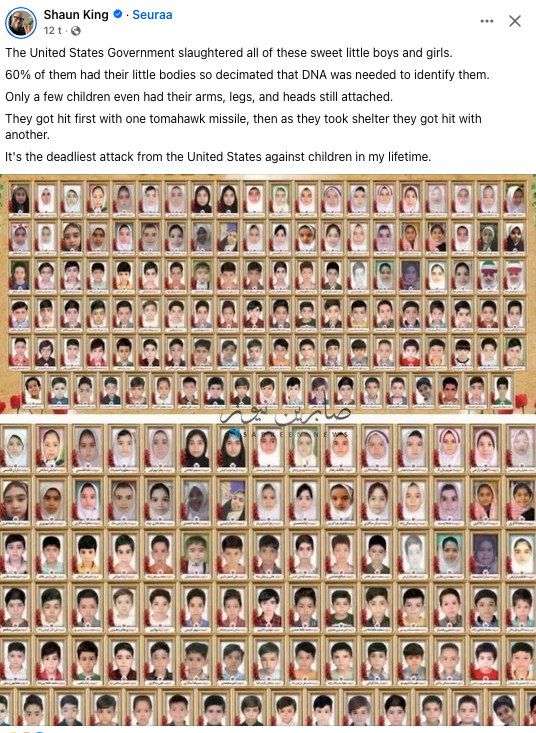

Former US intelligence oficer, Josephine Guilbeau, says in a moving speech how the attack by the US on the Minab elementary school in southern Iran, which caused the death of some 170 children, was an act of terrorism.
Pariah = an outcast.
Stating that the US’ and Israel’s war against Iran is a failure is a gross understatement. The hubris and bellicose styles of President Donald Trump and Prime Minister Benjamin Netanyahu have caused suffering but could also be blessings in disguise.
Twenty-nine days have passed since the US and Israel unleashed their bombs and death on Iranians. Both, intoxicated with their hubris, believed that only a surgical strike would do the job. Murder the supreme leader, Ali Khamenei, and the country’s leadership would capitulate.
After 29 days, Iran has not crumbled but has offered stiff resistance and wreaked havoc in the Middle East. On the contrary, and in the face of a land invasion that many claim will end in disaster, public opinion has shifted towards Iran.
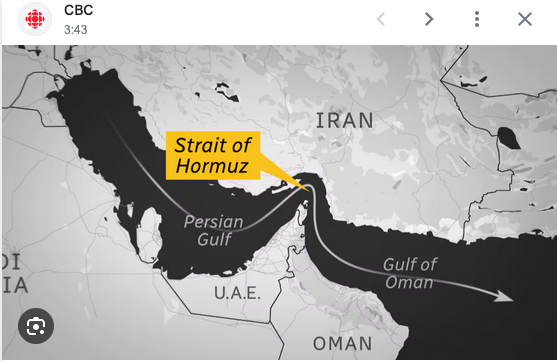
Strait of Hormuz. Source CBC.
In my native Argentina, the hubris of the military regime was the first clear indication that it was dying, and, eventually, had to relinquish power and call elections.
In the Middle East we are seeing a similar matter. Trump and Netnyahu, whose actions reveal their racism and hatred for Muslims, believed that their superior air power would do the job.
It didn’t but instead has made the global economy vulnerable and put it on the precipice of a deep recession.
What will be the political outcome of the war? One of these could spell the end of US hegemony in the region and the end of corrupt Gulf State kingdoms like Oman, UAE, Qatar, Bahrain, Saudi Arabia and Kuwait. All of these states would see their present corrupt leaders ejected from power.
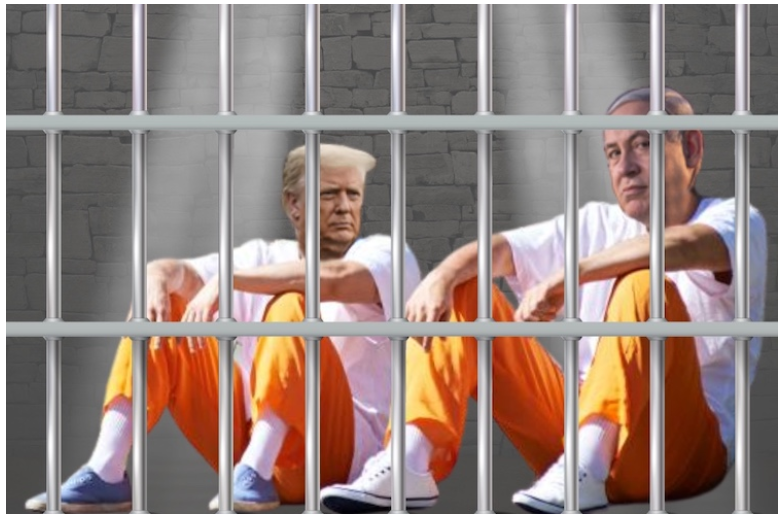
Trump and Netanyahu in their natural home. Source: Indepthnews.
Where would that leave Israel? With Netanyahu behind bars, it could lead to a new era where Israel would learn to live with its Arab neighbors. The gesture of hope and peace would permit the birth of a long-overdue Palestinian state.
Building peace is a long path and we must begin that task now.
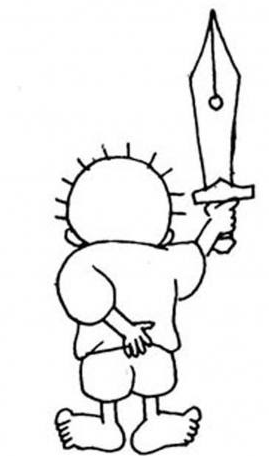
Handala is a ymbol of Palestinian defiance.
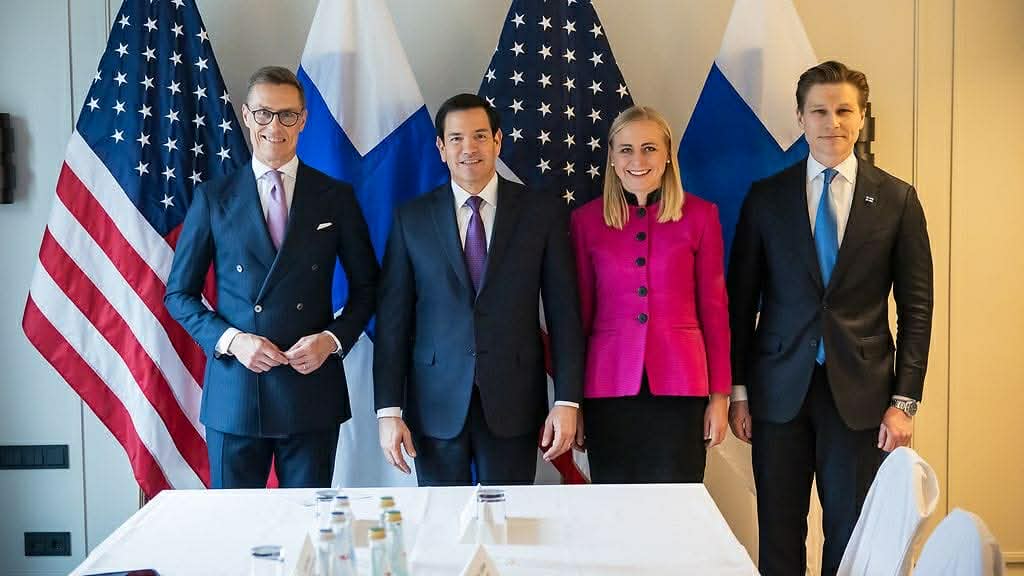
Amerikan Yhdysvalloissa Jesse Ventura, entinen Minnesotan kuvernööri, ammattipainija ja Vietnamin sodan veteraani esitti maansa johdolle kiusallisen ajatuksen:
”Sota on oikeutettu vain silloin, jos olet valmis lähettämään omat lapsesi sotimaan”.
Hän myös haastoi Donald Trumpin nuorimman pojan, Barron Trumpin: ”Tee jotain, mihin isälläsi ei ole ollut rohkeutta.” Trumpin suvussa ei Venturan mukaan kukaan ole suorittanut asepalvelusta sataan vuoteen. Venturan omassa perheessä sen on tehnyt jokainen mies.
Tämän ajatuksen soisi Suomessakin sisäistävän kaikkien niiden, jotka sota- ja Nato-kiimassaan nyt näyttävät suorastaan toivovan sotaa. Eduskunnassa tunnutaan ajattelevan, että siitä seuraisi heille vain jännittävä evakuonti bunkkeriin Kauhajoelle, josta he sitten monitoreistaan ohjaisivat peliä ja sievät Lotat kantaisivat kahvia ja karjalanpiirakoita. Jotkut ovat jo kuukausia touhukkaina toistelleet, että Suomi on nyt sodassa.
Kun tarpeeksi himotaan sotaa, uhotaan sodalla ja varoitetaan sodasta, sota tulee.
Kaikkien tuohon tyyliin toimivien tulisi pysähtyä ja miettiä, mitä siitä seuraisi itselle, perheelle ja ystäville. Isänmaalle.
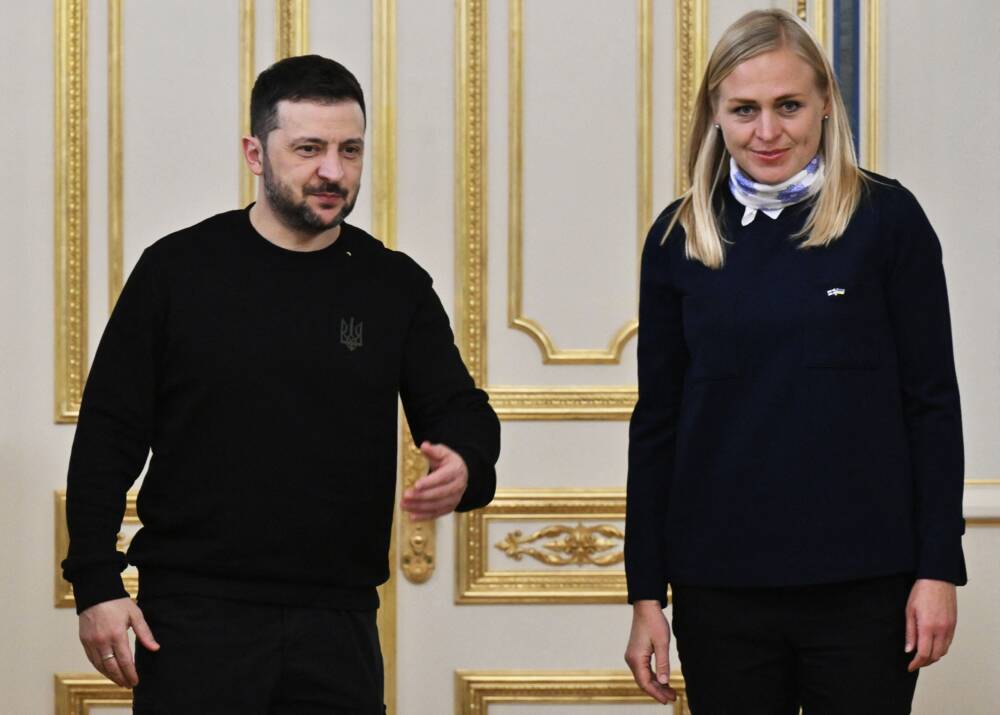
Poliittisessa johdossamme on myös henkilöitä, jotka puhuvat tunteella ja paasaten siitä, kuinka tukemme Ukrainalle on vankka. Ukrainaan matkustavat kaikki kynnelle kykenevät tullakseen kuvatuksi yhdessä suuren sotasankarin, Volodymyr Zelenskyin, kanssa ja saadakseen siten poliittista nostetta kotimaassa. Sota on kiehtovaa. Samaan aikaan näille maamme johtajille ei merkitse mitään tuhansien lapsien yhä jatkuva teurastaminen Palestiinassa. Se sota ei ole ”meidän sotamme”, sillä siellä tapetaan ”vääräuskoisia” ja ”liian nopeasti sikiäviä”. Kaikki tuollainenkin terminologia kääntyy vielä jonain päivänä sanojaansa vastaan. Sotaa ei saa pitää oikeutettuna, vaikka sen aloittajana olisi henkilön ihailema Ameriikan ihmemaa ja ”mahdollisuuksien tasa-arvon” entinen esikuva.
Miettikää, keitä ovat ne, jotka kantavat harteillaan sodan kustannukset ja seuraukset ja keitä ovat ne, jotka vain puhuvat niistä ja pelottelevat niillä. Ketkä haaveilevat sotateollisuusosakkeidensa arvonnoususta tai yrittävät lisätä ääniään seuraavissa vaaleissa Sodan Suuren Uhan varjolla.
Jos se sota sitten joskus tulee, pidettäköön huolta siitä, että maamme johdon jälkeläiset ovat ensimmäisinä ilmoittautumassa vapaaehtoisiksi. Tässä kohtaa ei pidä paikkaansa väite, että lasten ei pidä joutua kärsimään vanhempiensa teoista. Sota on sotaa ja vastuunkannon on lähdettävä sen aloittajista. Eikä auta sekään, jos presidenttimme sanoisi, että jättäkää lapsemme rauhaan. Suomen lähtö sotaan on oikeutettu vain, jos maamme johto lähettää eturintamalle omat lapsensa.
Lue alkuperänen kirjoitus täästä.
The recent parliamentary election in Denmark, one of Europe’s most Islmophobic countries, was a rude awakening to its Social Democratic Prime Minister Mette Frederiksen, who thought she could capitalize with the row over Greenland with the United States. Her party lost 12 MPs to receive only 21.85% of the vote compared to 27.54% in 2022.
So what went wrong?
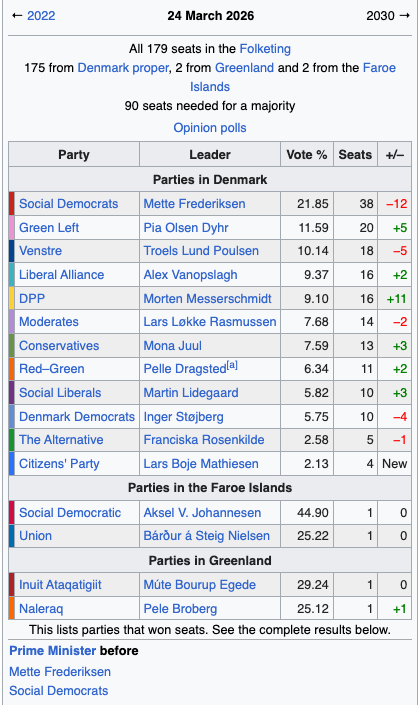
Source: Wikipedia
Even if Federikson is a Social Democrat, her immigration policy is Islamophobic.
It is a sweet irony that while she has warned about Islamization, it was actually a white supremacist US adminitration that posed the greater threat to national security by wanting to take over Greenland.
The latest European Islamophobia Report 2024 (pages 248-276) highights Denmark’s anti-Muslim racism problem.
“Media and politicians, including Prime Minister Mette Frederiksen, Frederik Vad,
and Ida Auken, contributed to a public discourse in which Muslims’ motives and loy-
alties were openly questioned. Key figures such as Eva Gregersen and Thomas Hoff-
mann played central roles in monitoring and casting suspicion on Muslims and their
civic engagement.”
If anything, the result proves that there is a certain saturation point for Islamophobic policies and campaigns.
It will be interesting to see how much the Perussuomalaiset (PS)* capitalize on their aggressive and hostile campaign against Muslims and other migrants.

On selvää, että hallituksen maahanmuuttopolitiikka on epäonnistunut, jos esimerkiksi Elinkeinoelämän keskusliitto (EK) toteaa Ylellä, että Suomen pitäisi poistaa saatavuusharkinta sekä vaatimus maasta poistumisesta, jos työntekijä irtisanotaan eikä löydä työtä kolmen kuukauden kuluessa. Jälkimmäistä määräaikaa tulisi pidentää kahdeksaan kuukauteen, EK mukaan.
Yksityinen, voittoa tavoittelematon taloustutkimuslaitos ETLA totesi, että Suomi tarvitsisi vuosittain nettomääräisesti 44 000 ulkomaalaista työvoimapulan kattamiseksi.
Näiden tietojen jälkeen Yle esitti videon, jossa nähtiin, kuinka työttömät ulkomaalaiset Tanskassa – joka on yksi EU:n islamofobisimmista maista – joutuvat tekemään vapaaehtoistyötä saadakseen sosiaalietuuksia.
Ylen tanskalaisessa videossa on se ongelma, että siinä oletetaan, että ulkomaalaiset ovat rodullistettuja ja työttömiä. Maahanmuuttajat ovat monimuotoinen ryhmä, joka koostuu monenlaisista ihmisistä.
Perussuomalaiset (PS)* -puolueen valtiovarainministeri Riikka Purra ehdotti äskettäin, että myös Suomessa työttömät ulkomaalaiset pitäisi pakottaa tekemään vapaaehtoistyötä saadakseen sosiaalietuuksia.
Tällaisia ehdotuksia on tarkasteltava varovasti, kun otetaan huomioon, että vuoden 2027 eduskuntavaalit ovat noin vuoden päässä.
PS-poliitikkojen vihamielisiä viestejä lukiessa on selvää, että he herättelevät Suomen rasistisia virtauksia saadakseen äänestäjiä.
Aivan kuten monet PS:n ehdottamat syrjivät ja rasistiset toimet ovat olleet perustuslain vastaisia. Perustuslain 6 § kieltää etuuskohtelun.
Alla on jälleen yksi Purran kepponen, jolla hän yrittää perustella jo kumottua väitettä, että maahanmuuttajat ovat pahoja ja uhka Suomelle.
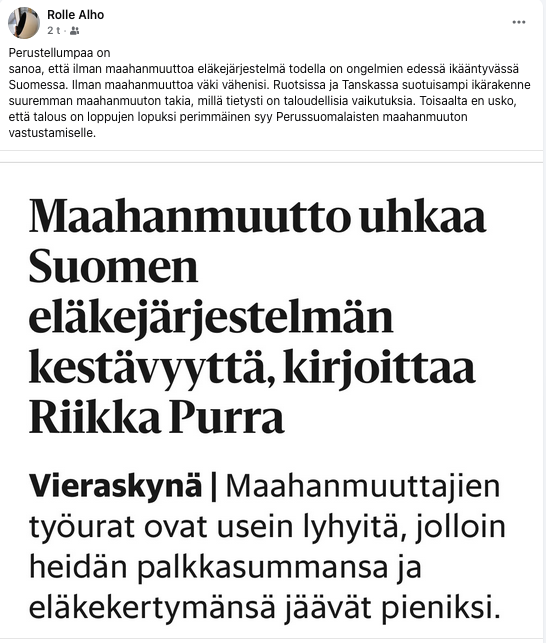
Lue alkuperänen juttu tästä.
Tämä blogikirjoitus on omistettu edesmenneelle Donald Fieldsille, joka toimi BBC:n, The Guardianin ja Politikenin Helsingin-kirjeenvaihtajana vuoteen 1988 asti ja kirjoitti kriittisesti suomettumisesta.
Ralf Friberg on toiminut useissa tehtävissä suurlähettiläästä ulkoministeriön lehdistöosaston johtoon. Hän valvoi tarkasti sitä, mitä Suomesta kirjoitettiin kylmän sodan aikana. Hänen keinonsa vaientaa kriitikot olivat kovia. Hän oli niin armoton, että yksi hänen entisistä kollegoistaan antoi hänelle lempinimen ”Leonid.”
Eräällä lounaalla Helsingin Savoy-ravintolassa Friberg ehdotti, että ennen kuin kirjoitan arkaluonteisesta suomettumisen aiheesta, minun tulisi ottaa häneen yhteyttä. Pidin tätä suoranaisena sensuurina.
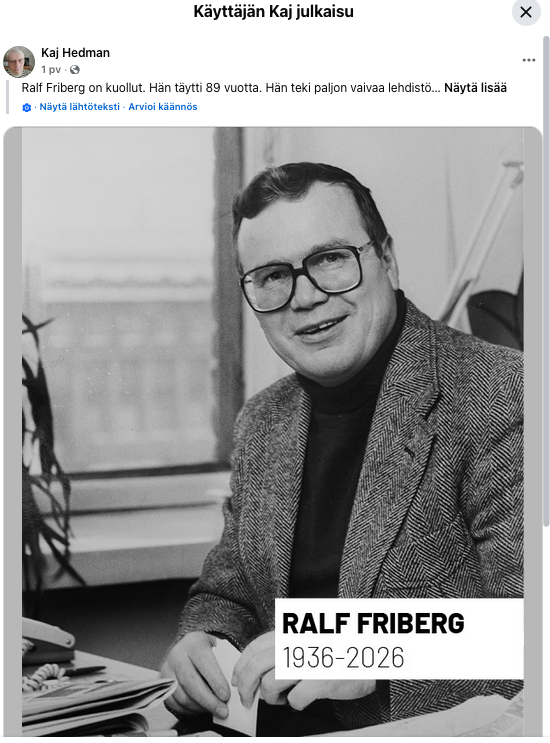
Lahde: Facebook
Lounastapaamisemme yksityiskohdat julkaistiin Suomen suurimmassa aikakauslehdessä Apu.
Seuraavana päivänä jutun julkaisemisen jälkeen sain puheluita joiltakin Fribergin entisiltä alaisilta, jotka kiittivät minua tekemästäni ja sanoivat Fribergin olleen kauhea ihminen, joka oli valmis tekemään mitä tahansa tuhotakseen ihmisen uran.
Paljastus toi esiin myös Fribergin avoimen suhteen Financial Timesiin. Hän valitti suoraan lehden toimittajille kirjoituksistani.
Financial Timesilla ei ollut ongelmaa siinä, että Finnfacts maksoi heidän toimittajiensa matkat Suomeen, kunhan he julkaisivat jotakin positiivista.
Finnfactsin kaltaiset ryhmät, Matti Kohvan johdolla, seurasivat myös ulkomaista mediaa. Muistan artikkelin, jonka Kohva kirjoitti Finn Niche -julkaisuun (päätoimittajana Olli Virtanen), jossa hän totesi, että hänen verensä kiehui aina, kun hän kuuli ulkomaisten toimittajien viittaavan suomettumiseen.
Toinen henkilö, joka tuki äärimmäistä sensuuria kylmän sodan aikana, oli Pekka Karhuvaara.
Continue reading “Äärimmäinen sensuuri Suomen kylmän sodan aikana”
This blog entry is dedicated to the late Donald Fields, Helsinki correspondent of the BBC, The Guardian, and Politiken to 1988, who wrote critically about Finlandisation.
Ralf Friberg held several roles, from ambassador to the head of the foreign ministry’s press section, which closely watched what was written about Finland during the Cold War. His methods to shut them up. He was so ruthless that even one of his former colleagues gave him the nickname “Leonid.”
At one lunch meeting at Helsinki’s Savoy restaurant, Friberg suggested that before I write on the sensitive topic of Finlandisation, I should get in touch with him. I considered this outright censorship.
Details of our lunch date were published in Finland’s biggest daily, Apu magazine.
The following day after the story was published, I got phone calls from some of Friberg’s former employees who thanked me for what I did and said that Friberg was a terrible person who would go to any lengths to destroy a person’s career.
The revelation also exposed the open relationship that Friberg had with the Financial Times. He would directly complain to the editors about my writing.
The Financial Times had no problems with Finnfacts paying for their journalists’ visit to Finland as long as they published something positivve.
Groups like Finnfacts, under Matti Kohva, also monitored the foreign media. I remember an article Kohva wrote in Finn Niche, a publication edited by Olli Virtanen, in which he said his blood boiled whenever he heard foreign journalists cite Finlandisation.
Continue reading “Extreme censorship during Finland’s Cold War”Oheneba “Ohe” Poku-Marboah, a software developer with an international background, has launched a project to help immigrants learn Finnish by sharing the real experiences of people who have successfully learned to speak the language.
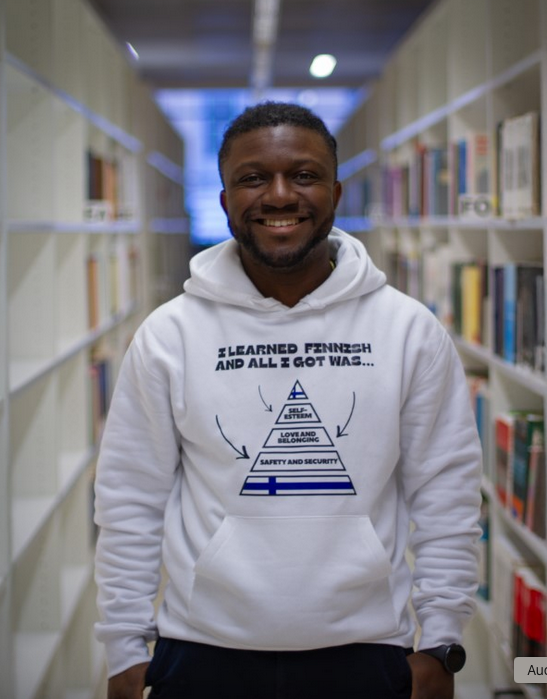
Oheneba “Ohe” Poku-Marboah. Photo by Olga Kryuchkova
The project was created by a developer who moved to Finland as a child and later realized how crucial the Finnish language is for integration and career opportunities.
Although he arrived at age 11 and completed most of his education in English-language schools, he said the importance of learning Finnish only became clear after graduation.
“I suddenly realized that in the real world, many opportunities require Finnish,” he told Migrant Tales. “That’s when I decided I had to take the language seriously.”
The idea for the project began in 2022 when he started reflecting on why some immigrants succeed in learning Finnish while others struggle. Conversations in everyday settings — including a chance discussion in a barbershop — helped spark the concept.
“I realized I’m not the only one who has managed to do this,” he said. “So I thought: why not let people share their stories about how they learned Finnish?”
The website, How I Learned Finnish – with Ohe, features inspiring success stories of immigrants who arrived in Finland as adults and eventually achieved a high level of fluency. The interviews are available on the website as well as on YouTube and podcast platforms.
While creator Poku-Marboah says he appreciates all the stories, three stand out for him: the language-learning journeys of Deborah Laajanen, Kseniia, and Jamie McDonald.
Those featured in the project include people who have gone on to study at Finnish-language universities, work professionally in Finnish, and even perform stand-up comedy in the language.
Laajanen, for example, entered law school at the University of Helsinki after learning Finnish in just a few years. McDonald began performing stand-up comedy in Finnish despite starting from zero as an adult learner. Kseniia describes discomfort as the engine of language learning, not an obstacle.
Poku-Marboah himself took a similar approach. At times, he told people he did not speak English, forcing conversations to happen in Finnish.
A recurring theme in the interviews is the role of identity in language learning. According to Poku-Marboah, many successful learners first made a conscious decision to see Finland as their home.
“For many people, it’s identity-based,” he said. “Once they decide they belong here and want to be part of society, learning the language becomes much easier.”
He also stresses the importance of consistent practice and immersion.
The project currently includes around a dozen interviews and has been entirely self-funded. Poku-Marboah hopes the stories will inspire newcomers navigating life in Finland.
“I felt something like this should exist,” he continued. “If someone is trying to learn Finnish, they can see how others in similar situations managed to do it.”
Despite receiving little response so far from the media he contacted, he plans to keep the project online so immigrants and students can continue learning from others’ experiences.
His message to newcomers is simple: aim high — and commit fully to life in Finland.
“We have unparalleled firepower, unlimited ammunition, and plenty of time – Watch what happens to these deranged scumbags today. “I know nothing about a desalination plant. They’re complaining about a desalination plant. We complain about the fact that they shouldn’t be chopping babies’ heads off.”
We have witnessed with sadness for the past two weeks destruction and carnage peppered with generous quantities of hubris and ignorance. Much of this destructive behavior has come from the Trump administration.
Source: Migrant Tales
The imperialistic attitude of the US and Israel has baly miscalculated Iran. They believed that a quick decapitation strike would put an end to the government in Teheran. Instead of causing an uprising, Ali Hosseini Khamenei’s death did not weaken Iran’s resolve but strengthened it.
The idea that Iran would follow the war call of Trump and Benjamin Netanyahu proves their little preparation and knowledge they have of Iran and its dynamics.
It’s not going the way that the US wanted with the global economy being hit by the closure of the Strait of Hormuz, where 20% of oil passes.
“You may have a different opinion about Iran, but the racism of the West against Persians and Muslims feeds the hubris and ignorance. It explains why coverage of the war is usually biased, hypocritical, even racist.”
Continue reading “Hubris and ignorance equals defeat”